
Every website project has its own challenges. Some require advanced technology, some require unique design thinking, and some require us to step back and understand the reality of the business before making technical decisions.
Our work with ARD Performance was one such project.
What started as a request for an e-commerce website quickly evolved into a much larger conversation about business goals, marketplace models, budget constraints, and the importance of building the right solution rather than the most expensive one.
This is the story of how we built a multi-vendor e-commerce platform for ARD Performance while staying within a startup-friendly budget.
Understanding the Business
ARD Performance operates in the automotive performance tuning and aftermarket parts industry. Their business revolves around supplying and selling performance components such as suspension systems, mufflers, air filters, brake pads, and various other upgrades for automotive enthusiasts.
Like many growing businesses, they had two primary goals.
The first was straightforward: they wanted a platform to sell automotive performance parts online.
The second was equally important: they wanted to establish a strong digital identity. In today’s world, a website is often the first impression customers have of a business. ARD Performance wanted a professional platform that would help build trust and credibility while supporting their long-term growth.
As we started discussing the project in greater detail, we realized that this wasn’t going to be a conventional online store.
A Typical E-Commerce Website Wasn’t Enough
Many businesses simply need a website where products are listed, customers place orders, and the business fulfills them.
ARD Performance’s requirement was different.
They wanted to create a platform where multiple vendors could participate and sell their products through the ARD Performance ecosystem. Each vendor needed access to their own portal and product management capabilities while still operating under a unified marketplace experience.
This transformed the project from a standard e-commerce website into a multi-vendor marketplace.
The challenge was no longer just about selling products. It became about creating an ecosystem that could support multiple stakeholders while remaining simple and efficient for customers.
The Reality: Budget and Timeline Constraints
Like many early-stage businesses, ARD Performance was operating within strict financial limitations.
The team was ambitious and enthusiastic, but the available budget and timeline were limited.
From a purely technical perspective, we could have recommended a completely custom-built marketplace developed from scratch using modern frontend frameworks, custom backend architecture, and a fully tailored vendor management system.
However, that approach would have significantly exceeded the available budget and timeline.
At Design Katte, we believe technology decisions should serve business goals rather than developer preferences.
Instead of saying, “This cannot be done within your budget,” we asked a different question:
How can we achieve the client’s objectives while respecting their constraints?
That question shaped the entire project.
Choosing the Right Technology Stack
After evaluating the requirements, we decided to build the platform using WordPress.
For many businesses, WordPress is often misunderstood as a simple website platform. In reality, its mature ecosystem and extensive plugin library make it a powerful foundation for solving complex business problems quickly and cost-effectively.
The decision was practical.
We needed:
- E-commerce functionality
- Multi-vendor capabilities
- Payment gateway integrations
- Shipping integrations
- Scalability for future growth
- Faster deployment timelines
WordPress allowed us to achieve all of these goals while staying within the project’s constraints.
Rather than spending months building fundamental features from scratch, we could focus our effort on customizing and adapting proven solutions to meet the client’s specific requirements.
Building the Marketplace Structure
Before touching any technology, we spent time understanding the business itself.
One of the most important parts of the project was helping define how products would be organized and presented.
Through discussions and brainstorming sessions with the client, we identified three primary categories:
On-Road Performance
This category focused on performance upgrades and accessories designed for road-going vehicles.
Off-Road Vehicles
This section catered to enthusiasts looking for products specifically designed for off-road applications.
Bikes
A dedicated category for motorcycle-related performance products and accessories.
These categories were not chosen randomly.
They reflected both the client’s inventory structure and the market segments that customers were most likely to search for and engage with.
By simplifying the product ecosystem into three major categories, we improved both navigation and user experience.
Implementing Multi-Vendor Functionality
The heart of the project was the marketplace system itself.
Since the client wanted vendors to manage their own products and operations, we evaluated multiple solutions within the WordPress ecosystem and selected a multi-vendor platform that aligned with the project’s requirements.
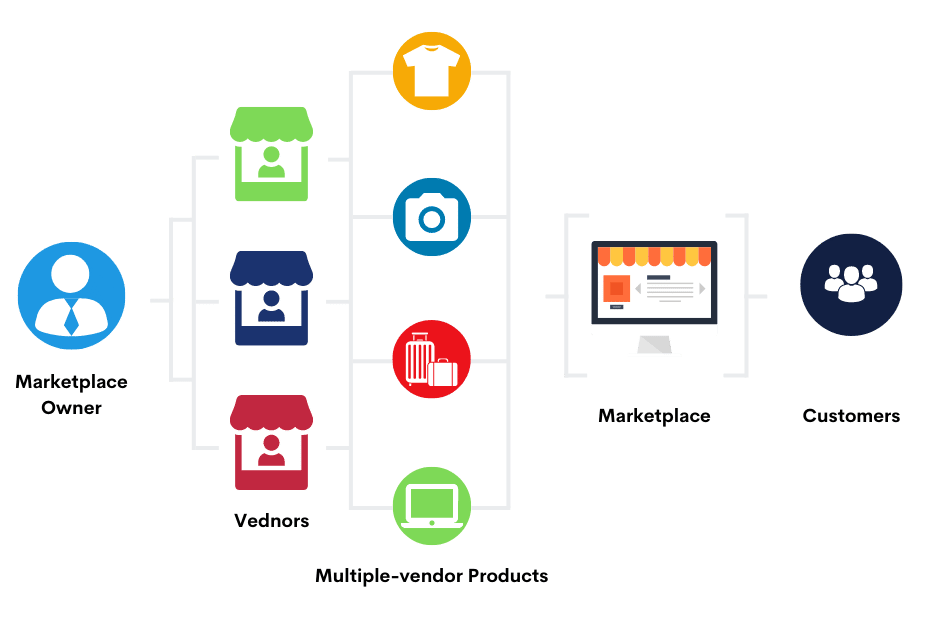
Given the budget constraints, we carefully chose a solution that provided the necessary functionality without introducing unnecessary costs.
However, selecting a plugin was only the beginning.
Every business has unique workflows, and ARD Performance was no exception.
To make the platform fit the client’s needs, we customized and adjusted various aspects of the vendor management experience. The goal was to create a workflow that felt natural to both administrators and vendors while maintaining operational efficiency.
This stage required significant problem-solving and adaptation, proving once again that successful projects are rarely about installing software and hoping for the best. They are about understanding requirements and shaping technology around them.
Payment and Shipping Integrations
A marketplace is only as effective as the systems supporting it.
To ensure smooth operations, we worked closely with the client while evaluating payment and logistics providers.
Razorpay Integration
For payment processing, we selected Razorpay.
The platform offered reliability, ease of integration, and a user-friendly experience for both the client and customers. It also allowed us to implement payment functionality quickly while maintaining confidence in transaction security.
Shiprocket Integration
Shipping was another critical component.
After evaluating options, we chose Shiprocket because of its strong logistics network and integration capabilities.
One of the advantages was the ability to fetch shipping information and costs directly into the website, helping automate a significant part of the fulfillment process.
We worked closely with the available tools and integration systems to ensure a seamless experience between ordering, payment, and shipping.
Balancing Expectations and Constraints
Every project involves trade-offs.
When budgets are limited, it is important to be honest about what is achievable and what may need to wait for future phases.
There were certain compromises in areas such as visual refinement and some advanced functionality that would typically be included in a larger-budget custom solution.
However, our focus remained clear:
Build a reliable platform that fulfills the client’s core business objectives.
Rather than chasing perfection, we prioritized functionality, usability, scalability, and business value.
The result was a platform that aligned with the client’s expectations while remaining realistic within the available resources.
A Lesson Beyond Technology
Looking back, one of the most important lessons from this project has very little to do with WordPress, plugins, or e-commerce.
It is about empathy.
Many young businesses operate under tight constraints. Often, they are not looking for the cheapest solution. They are simply working with the resources available to them.
As designers and developers, it is easy to focus only on technology.
But successful projects begin with understanding people.
Clients may not always know exactly what they need. Sometimes they ask for a particular feature, platform, or application because they believe it will solve a problem.
Our responsibility is to look deeper and understand the underlying goal.
Instead of asking, “What did the client request?”
We should ask:
“Why does the client need this?”
The answer often leads to better decisions, better products, and better outcomes.
At Design Katte, this philosophy shapes the way we work. We listen first, understand the business, identify the real objectives, and then recommend solutions that make sense for the client’s stage of growth.
Final Thoughts
The ARD Performance project demonstrates that effective digital solutions do not always require massive budgets or custom-built platforms.
With the right strategy, thoughtful planning, and a clear understanding of business goals, it is possible to create powerful solutions using existing technologies and proven tools.
By combining WordPress, multi-vendor functionality, Razorpay, Shiprocket, and a carefully planned marketplace structure, we helped transform an idea into a working digital platform capable of supporting future growth.
More importantly, we helped a growing business take another step forward in its journey.
And sometimes, that is exactly what good design and development should do.