
How Design Katte worked with Akhila Karnataka Vishwakarma Mahasabha to create a connected organisational identity system spanning visual identity, website design, digital credentials, membership administration and physical identity cards.
Project: Organisational Identity & Digital Credential System
Client: Akhila Karnataka Vishwakarma Mahasabha (AKVM)
Design practice: Design Katte
Disciplines: Identity Design, UX Design, Website Development, Service Design, Software Development, Digital Credential Verification, Physical Product Design and Hardware Integration
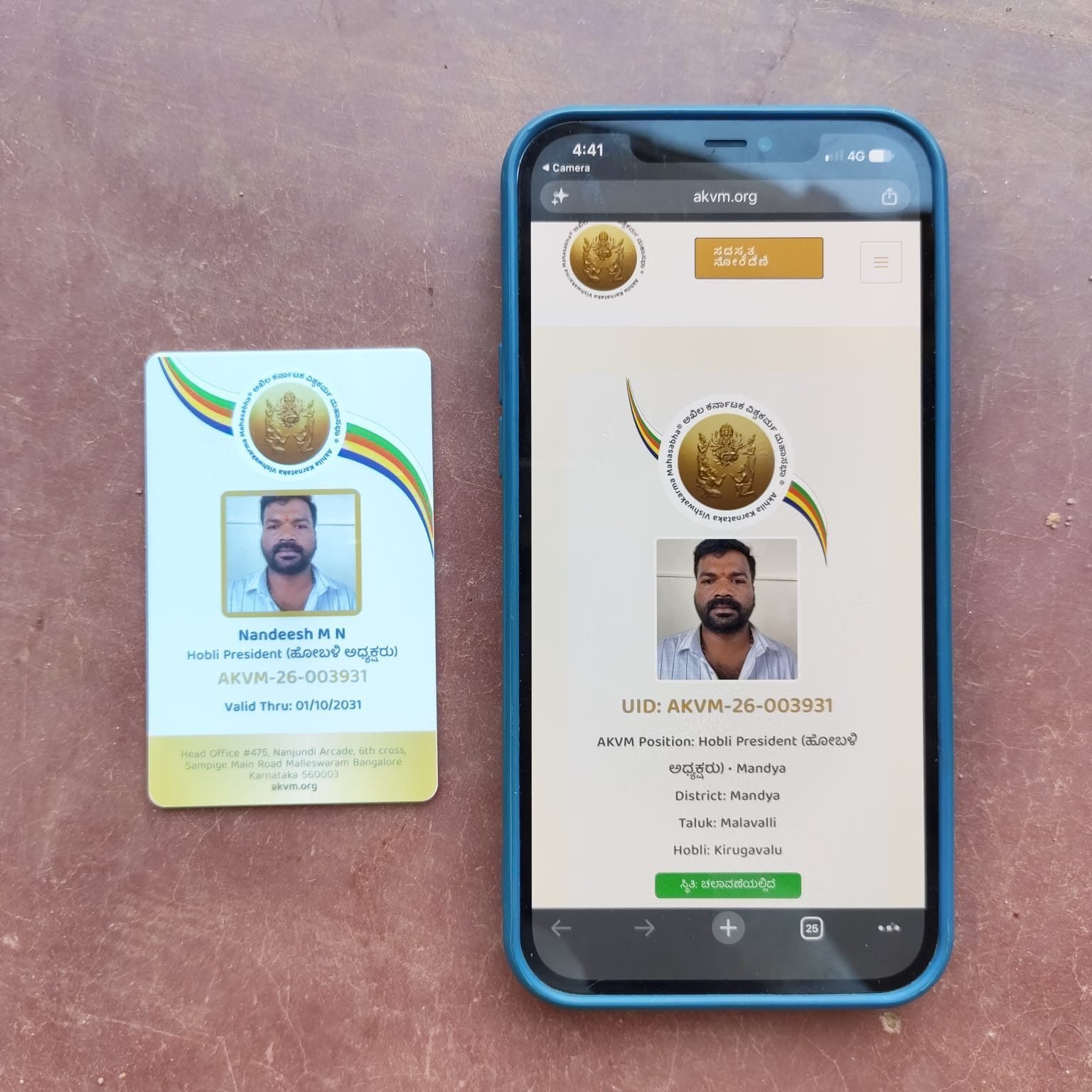
The Challenge: Protecting an Organisation’s Identity and Trust
An identity card can be forged. A designation can be misrepresented. An organisation’s name can be misused.
But how can someone independently verify the identity and authority of the person standing in front of them?
This was the fundamental question behind our engagement with Akhila Karnataka Vishwakarma Mahasabha, a community organisation representing the Vishwakarma community in Karnataka.
Shri K. P. Nanjundi Vishwakarma approached us with a challenge that went beyond the conventional requirements of a membership management system. Through decades of social service, he had built goodwill and trust within the community. The organisation needed a reliable way to protect that trust while managing the identities and designations of its office bearers and members.
The concern was not limited to outsiders impersonating the organisation. The system also needed to help prevent the unauthorised use of organisational identity by individuals claiming to represent AKVM, including people whose designations or authority might no longer be valid.
A professionally printed identity card, by itself, could not establish whether the person presenting it was genuinely associated with the organisation or whether the information printed on it was current.
The challenge, therefore, was larger than designing a better identity card.
How could we help an organisation establish a coherent identity, manage its representatives, and provide a practical way for others to verify their credentials?
We approached this as a connected design problem, rather than a request for an isolated piece of software.
Looking Beyond the Identity Card
The conventional approach would have been to develop a membership database, print identity cards and consider the job complete.
But that would have addressed only part of the problem.
The organisation needed to communicate its identity to the public, onboard members efficiently, distinguish between different organisational roles, manage designations and credential validity, and provide a mechanism through which people could check the credentials presented to them.
These activities were interconnected.
The website needed to represent the organisation accurately. The identity cards needed to reflect its visual identity and membership structure. The administrative system needed to manage the underlying records. And the verification mechanism needed to connect the physical card to the organisation’s digital records.
We therefore considered the project as an end-to-end system with several connected components:
- A visual identity that reflected the organisation and its heritage.
- A public-facing website that communicated its purpose and activities.
- A membership onboarding and administrative system.
- A physical identity card system with distinct treatments for members and office bearers.
- A digital credential framework that connected the cards to verifiable records.
- A practical implementation involving hardware, printing and real-world onboarding.
The goal was to make these elements work together as one coherent experience.
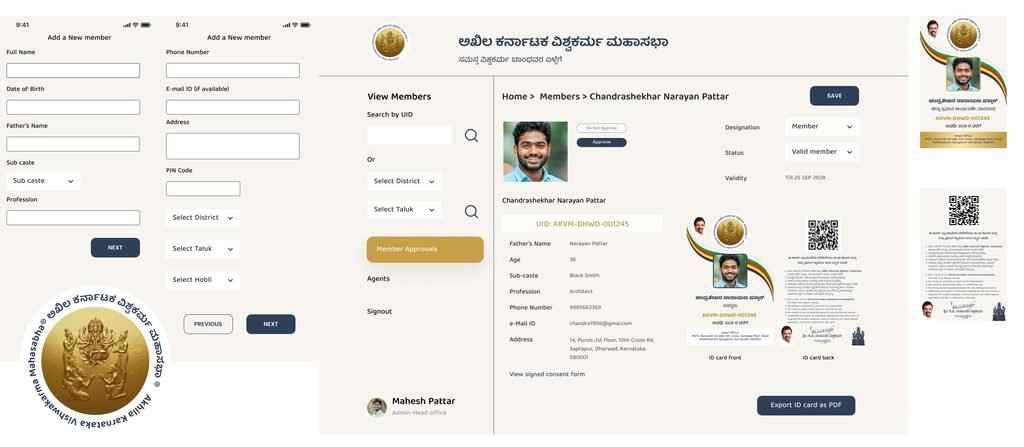
01. Designing an Identity Rooted in Heritage
Before addressing digital verification, we needed to consider how the organisation presented itself.
The Vishwakarma community has a rich association with traditional craftsmanship. We wanted the organisation’s visual identity to acknowledge that heritage while providing a contemporary identity suitable for a modern institution.
As part of the project, we designed a new logo for Akhila Karnataka Vishwakarma Mahasabha, drawing inspiration from the community’s traditional craftsmanship and cultural associations.
The objective was to develop an identity that could work consistently across different contexts, from the website and membership cards to the organisation’s broader communication materials.
We treated the logo as the starting point for a wider visual language, rather than as an isolated graphic.
The identity needed to be recognisable, appropriate to the organisation and adaptable to both physical and digital applications.
This became particularly important when designing the identity cards. The visual language had to connect the cards to the organisation while accommodating the different roles represented within it.
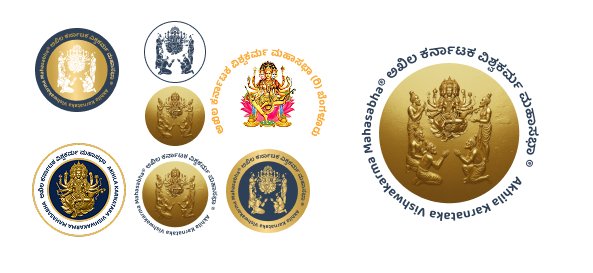
One identity, different roles
The organisation needed identity cards for both general members and office bearers.
Rather than designing unrelated cards, we developed a consistent visual system with subtle but recognisable differences between the two categories.
The cards needed to feel elegant and belong to the same organisation, while making the distinction between general membership and organisational responsibility visible.
This was an important balance. Visual design could communicate the intended role of a card, but it could not, on its own, prove that the card or its holder was genuine.
That distinction would become central to the digital verification system.
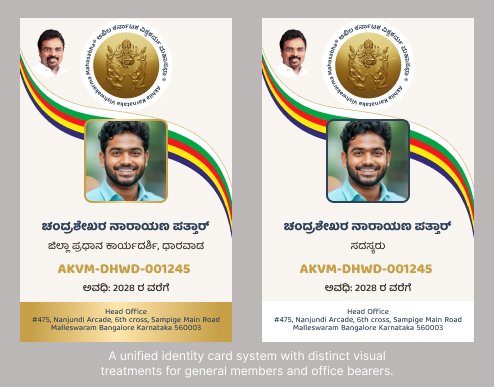
02. Designing the Organisation’s Digital Presence
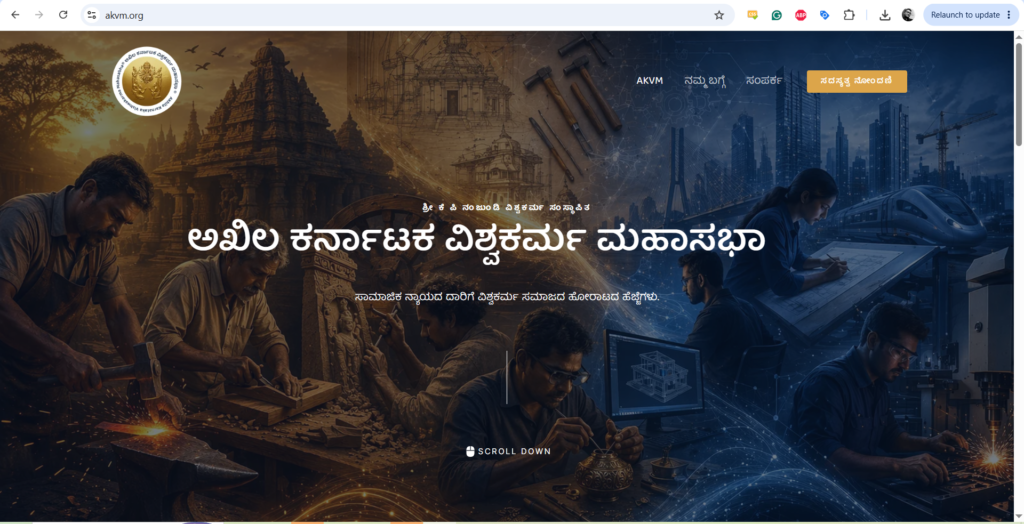
The website was another important part of the project.
It was not simply an online brochure. It was the organisation’s public-facing digital presence and an opportunity to communicate its heritage, craftsmanship, community activities and institutional identity.
We designed and developed the website to bring these elements together in a coherent digital experience.
The website needed to communicate what the organisation stood for, provide a place for people to learn about it, and present its activities and identity in an accessible way.
We also integrated links to the member onboarding process into the website, connecting the public-facing experience with the organisation’s internal membership workflow.
This meant the website served two complementary purposes.
First, it communicated the organisation’s story and identity to the wider public.
Second, it provided an entry point into the digital processes used to register and manage members.
The public website and the administrative system served different needs, but they were part of the same overall project.
03. PUBVIC: Making Identity Cards Verifiable
The insight
An identity card is a physical representation of a person’s association with an organisation. But the physical object and the identity it represents are not the same thing.
A card can be copied or reproduced. Its printed details may also become outdated when a person’s designation or status changes.
We wanted to introduce a way to check the digital record associated with a card, rather than relying entirely on its physical appearance.
This led to PUBVIC, our framework for a Publicly Verifiable Identity Credential linked to a physical identity card.
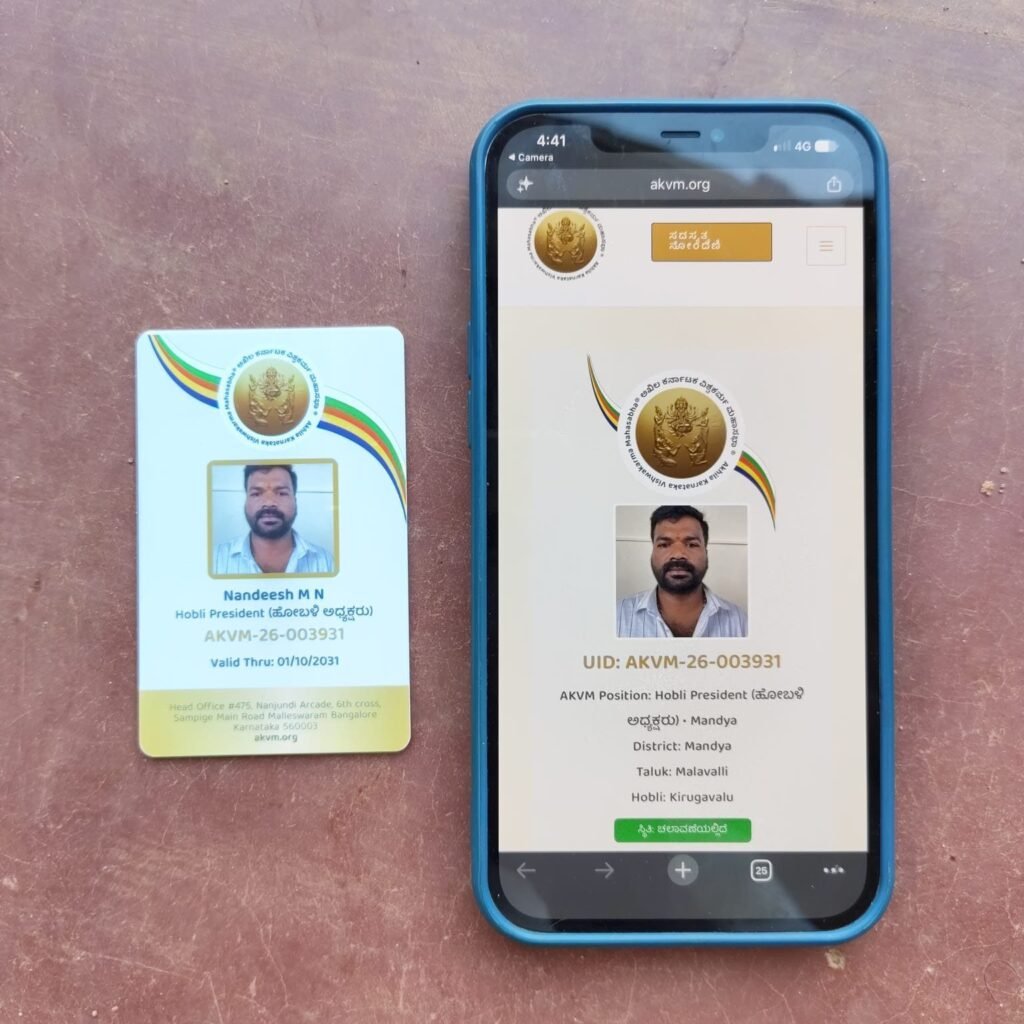
The principle was straightforward: the card would carry a QR code connecting it to a digital record maintained by the issuing organisation.
A person checking the card could scan the QR code and view the associated verification page, including the photograph and relevant details recorded by the organisation.
This added a digital layer to the physical identity card.
What happens when someone scans the card?
Consider a person presenting an identity card and claiming to represent an organisation.
Instead of relying solely on the card’s appearance, the verifier can scan its QR code and access the associated digital record.
The verifier can then compare the photograph and relevant details displayed on the verification page with the physical card and the person presenting it.
The connection between the card and the digital record changes what verification can involve.
If someone creates a completely fake card with an invalid QR code, it should not resolve to a valid credential in the organisation’s system.
If someone copies the QR code from a genuine card, the code may still lead to the genuine record. However, that record will display the photograph and details associated with the original credential. Differences between the physical card and the digital record can reveal a potential mismatch.
A copied QR code is therefore not automatically proof that the person presenting it is genuine.
The system gives the verifier another source of information against which to assess the claim.
The objective was not to make an identity card impossible to copy. It was to make copying the card alone insufficient to establish trust.
Why QR codes?
We considered the verification experience from the perspective of the person actually checking the card.
A technically sophisticated solution would have limited practical value if it required specialised equipment, unfamiliar procedures or too many steps.
Over the past several years, the widespread adoption of UPI payments in India has made QR-code scanning a familiar behaviour. People routinely use their smartphones to scan codes when making payments.
We saw an opportunity to build on that existing familiarity.
Rather than asking people to learn a new interaction, we could use a QR code printed directly on the identity card and allow verification through a smartphone.
This avoided the need for a dedicated barcode reader or specialised verification hardware. It also meant that the verifier did not need to install a dedicated application simply to access the verification page.
The QR code was not chosen because it was the most technologically advanced option. It was chosen because it offered a practical way to connect the physical card to the digital record within the context in which the system would be used.
This reflects a principle that guides our design decisions: technology should be selected according to the problem, the people involved and the conditions of use.
Sometimes, the right solution is not to introduce a new behaviour. It is to recognise one that people already understand and apply it to a new problem.
We didn’t choose a technology and then look for a problem to solve with it. We started with the problem and selected a technology that made the solution practical.
04. Designing for Everyday Operations
A verification system depends on the quality and accuracy of the records behind it. That made member onboarding and administration essential parts of the project.
We needed to make the process practical for the people responsible for registering members, while giving administrators the controls required to manage credentials over time.
Mobile-friendly member onboarding
Member onboarding often happens during meetings, gatherings and other in-person interactions.
Requiring staff to use a desktop computer for every registration would have introduced unnecessary friction.
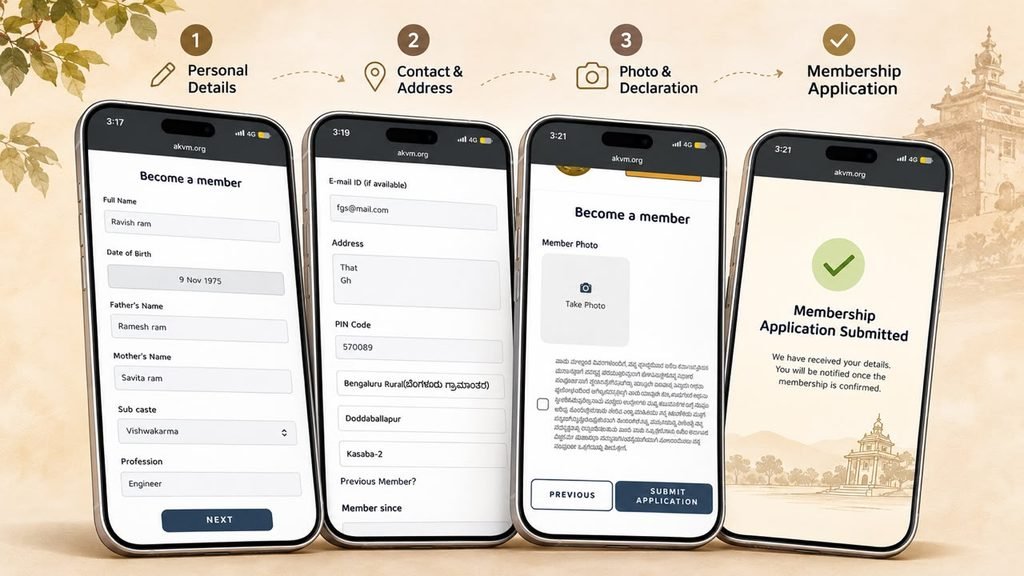
We therefore developed a lightweight, mobile-friendly web interface that could be accessed through a simple link.
It was not a native mobile application that members or staff had to download from an app store. It was a web-based interface designed to work conveniently on a smartphone.
Using the phone’s camera, authorised personnel could photograph members and capture their details during the onboarding process.
This made it possible to register members in the setting where the interaction was already taking place.
The design decision was simple: instead of forcing the workflow into a particular device or environment, we adapted the interface to the way the organisation needed to work.
A dedicated administrative system
Onboarding was only one part of the process. The organisation also needed a way to manage its members and their changing roles.
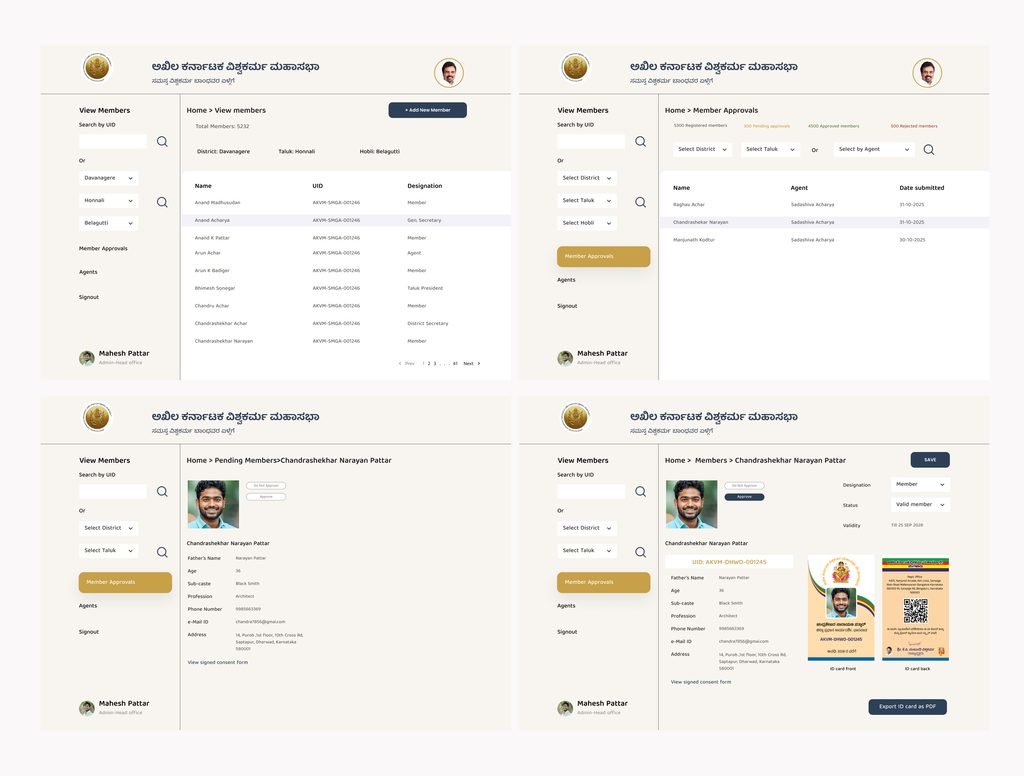
We developed a dedicated, cloud-based administrative panel within the WordPress system.
Accessible over the internet to authorised administrators, it provided controls for reviewing and approving members, assigning designations, managing validity, and suspending or terminating credentials when required.
These controls allowed the organisation to manage membership records as an ongoing operational responsibility rather than treating the printed identity card as the final, unchangeable record.
When an authorised administrator changed a member’s designation, validity or status, the associated verification information could reflect that change according to the system’s implemented rules.
The administrative panel and the public verification page therefore served complementary purposes.
One allowed the organisation to manage its records. The other allowed people checking a credential to consult the information associated with it.
05. From Digital Design to Physical Production
We didn’t stop at delivering the software.
One of the most important aspects of this project was our involvement in the complete implementation.
We did not want to hand over a web application and leave the client to figure out the practical details of producing and issuing identity cards.
The system required suitable printing equipment, a working connection between the software and the printer, and a process that could be used by the organisation in its day-to-day activities.
We worked with the client to identify a suitable card printer, procured the equipment, connected it to the system and managed the printing workflow.
This was part of the design and implementation process, not an unrelated procurement exercise.
The hardware had to work as part of the overall system, turning the information captured digitally into a finished physical credential.
Testing the system with real members
The first implementation was particularly valuable.
During a delegation meeting in Bengaluru, where the organisation’s office bearers had gathered, we participated directly in onboarding the first members.
We captured their photographs and details, processed their registrations, connected the card printer to our laptop, printed their identity cards at the venue and handed the cards directly to them.
The process brought the different components together in a real operating environment.
The mobile interface was used to capture information. The administrative workflow supported the member records. The printing setup produced the physical cards. And the cards were issued to the people for whom they had been designed.
Rather than validating the project only through demonstrations or software testing, we put the complete workflow into practice.
This hands-on implementation helped us work through the practical details of the process and see how the components functioned together.
It also reinforced an important distinction: a system that works in a development environment is not necessarily a system that is ready for everyday use.
The real test is whether people can use it successfully, with the equipment and processes available to them.
Implementation is part of design
For us, this was not merely the final stage of a software project.
The selection of hardware, the connection between digital and physical processes, the onboarding experience and the first real issuance of cards were all part of making the design work.
A system is not complete simply because its interfaces have been built. It must also work within the operational environment for which it was designed.
Our involvement extended from understanding the original problem to designing the identity, developing the software, integrating the hardware and participating in the first real-world implementation.
This is how we approach multidisciplinary projects: the work continues beyond the screen, through the details that determine whether a solution can be used successfully.
06. One Connected Organisational System
Looking at the individual deliverables, the project included a logo, a website, member onboarding software, an administrative dashboard, identity cards, QR-based verification and card-printing equipment.
But treating these as separate outputs would miss the central idea of the project.
Each component was connected to the others.
The visual identity established a consistent representation of the organisation.
The website communicated its heritage, activities and institutional identity to the public.
The onboarding interface provided a practical way to capture member details.
The administrative system allowed authorised personnel to manage records and designations.
The physical identity cards represented the organisation’s membership structure, while the digital credential framework provided a way to access and check the associated records.
The printing workflow brought the digital system into the physical world.
Together, these elements created a connected process spanning public communication, internal administration and identity verification.
What This Project Represents
PUBVIC began with a concern about identity misuse and the need to protect an organisation’s name and the trust associated with it.
The solution required more than a QR code or a database. It required us to consider how the organisation presented itself, how its members were registered, how office bearers were distinguished, how records were managed, and how people could verify the credentials presented to them.
It also required us to work through the practical details of implementation, including hardware procurement, integration and the first real-world onboarding process.
The resulting project brought together organisational identity, digital design, software development, physical credentials and operational implementation.
The verification system does not make fraud impossible. Its effectiveness depends on accurate organisational records, appropriate system security and people checking the information returned by the verification process. However, it provides an additional layer of verification and is designed to make certain forms of impersonation more difficult.
For us, the value of the project lies in how the different parts work together to address the original problem.
Designing systems, not just deliverables
At Design Katte, we approach design challenges by looking beyond the immediate output.
A request for an identity card may reveal a need for a better credential system. A request for software may reveal a wider operational problem. A website may need to do more than communicate information; it may also connect to the processes through which an organisation functions.
Our role is to understand these relationships and develop a solution that addresses the larger problem.
PUBVIC is an example of that approach.
We worked with Akhila Karnataka Vishwakarma Mahasabha across its identity, website, software, physical credentials and implementation, connecting the pieces into a coherent system.
We didn’t approach this as a collection of separate deliverables. We approached it as one interconnected design problem, from the organisation’s identity and public presence to the software, physical credentials and real-world implementation.
About Design Katte
Design Katte is an independent design practice working across industrial design, digital products, service design, engineering and prototyping.
Our approach combines human-centred thinking with technical execution. We work to understand the context of a problem, identify the right opportunities and develop solutions that are not only well designed but practical to implement.
We believe design and engineering are inseparable when the goal is to create solutions that work in the real world.
PUBVIC reflects this philosophy: a project that began with a question about identity and trust and developed into a connected organisational system spanning visual identity, digital experiences, software, physical products and implementation.
Design Katte — Designing beyond the obvious.
Reach out to us hello@designkatte.com